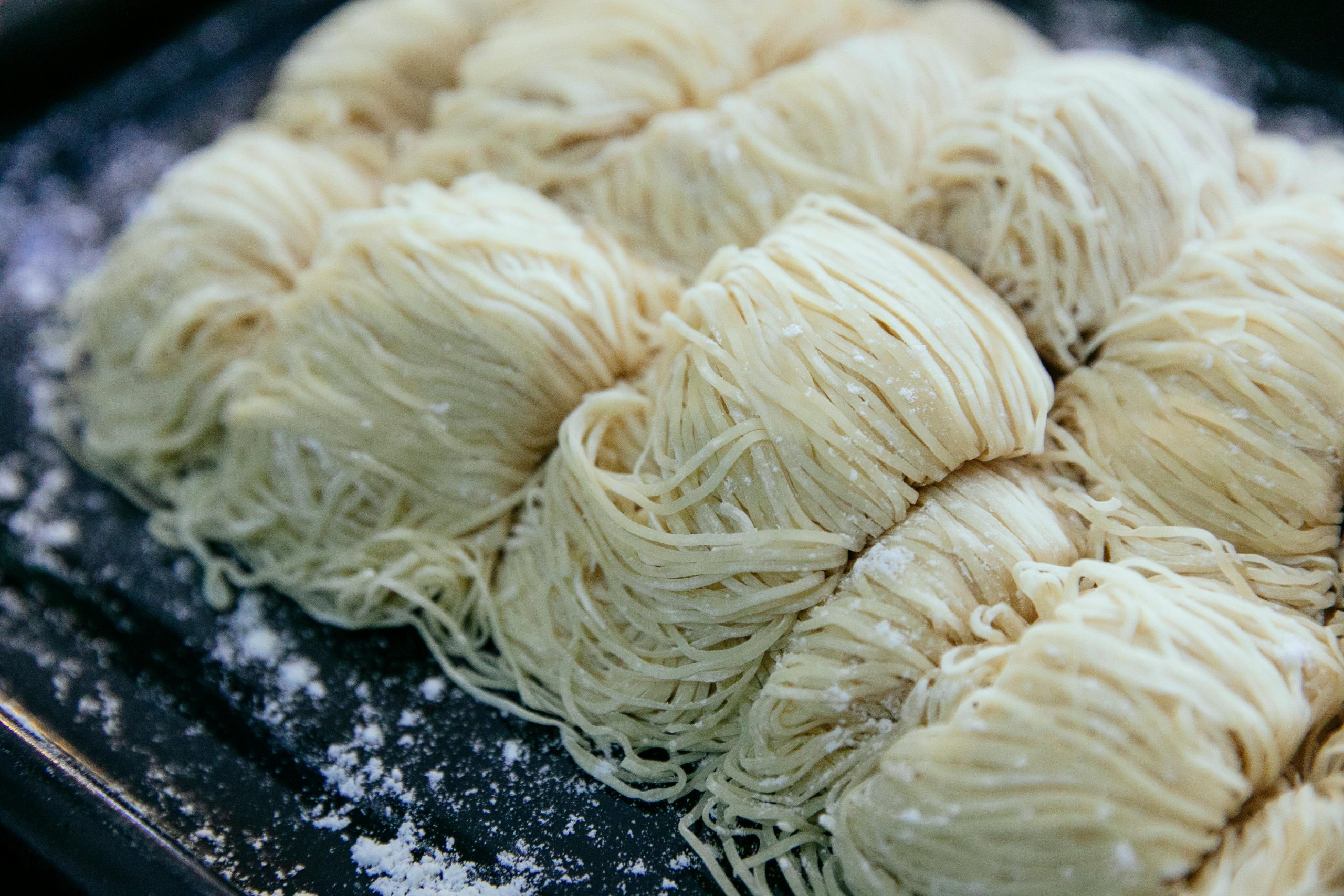
Making homemade pasta is one of the most rewarding culinary experiences you can have in your kitchen. There’s something magical about transforming simple ingredients—flour, eggs, and a pinch of salt—into silky, delicious strands of pasta that far surpass anything you can buy at the store.
The Basic Pasta Dough Recipe
For a basic pasta dough, you’ll need just a few ingredients:
– 2 cups all-purpose flour (or ’00’ flour for a more authentic Italian texture)
– 3 large eggs
– 1/2 teaspoon salt
– 1 tablespoon olive oil (optional)
The Process
Start by creating a mound of flour on a clean work surface. Make a well in the center and crack your eggs into it. Add the salt and begin whisking the eggs with a fork, gradually incorporating the flour from the edges. Once the dough starts to come together, use your hands to knead it for about 10 minutes until it becomes smooth and elastic.
Resting is Key
Wrap your dough in plastic wrap and let it rest for at least 30 minutes at room temperature. This allows the gluten to relax, making the dough easier to roll out.
Rolling and Shaping
You can roll your pasta by hand with a rolling pin or use a pasta machine. If using a machine, start with the widest setting and gradually work your way to thinner settings. For hand-rolling, work on a lightly floured surface and roll the dough as thin as possible—you should be able to see your hand through it.
Cutting Your Pasta
Once rolled, you can cut your pasta into various shapes:
– Fettuccine: Cut into 1/4-inch wide strips
– Pappardelle: Cut into 3/4-inch wide strips
– Tagliatelle: Cut into 1/3-inch wide strips
– Lasagne sheets: Leave in wide rectangles
Cooking Fresh Pasta
Fresh pasta cooks much faster than dried—usually in just 2-4 minutes in boiling salted water. It’s done when it floats to the surface and has a tender but still slightly firm texture.
Tips for Success
1. Keep your work surface and hands lightly floured to prevent sticking
2. Don’t skip the resting time—it makes a huge difference
3. Fresh pasta can be frozen for up to 3 months
4. Save some pasta cooking water to help emulsify your sauce
5. Fresh pasta pairs beautifully with both simple butter sauces and rich ragùs
Making pasta from scratch might seem intimidating at first, but with practice, you’ll find it becomes second nature. The taste and texture of homemade pasta are incomparable, and your family and friends will be amazed by your culinary skills. So roll up your sleeves, dust your counter with flour, and get ready to create something truly special!